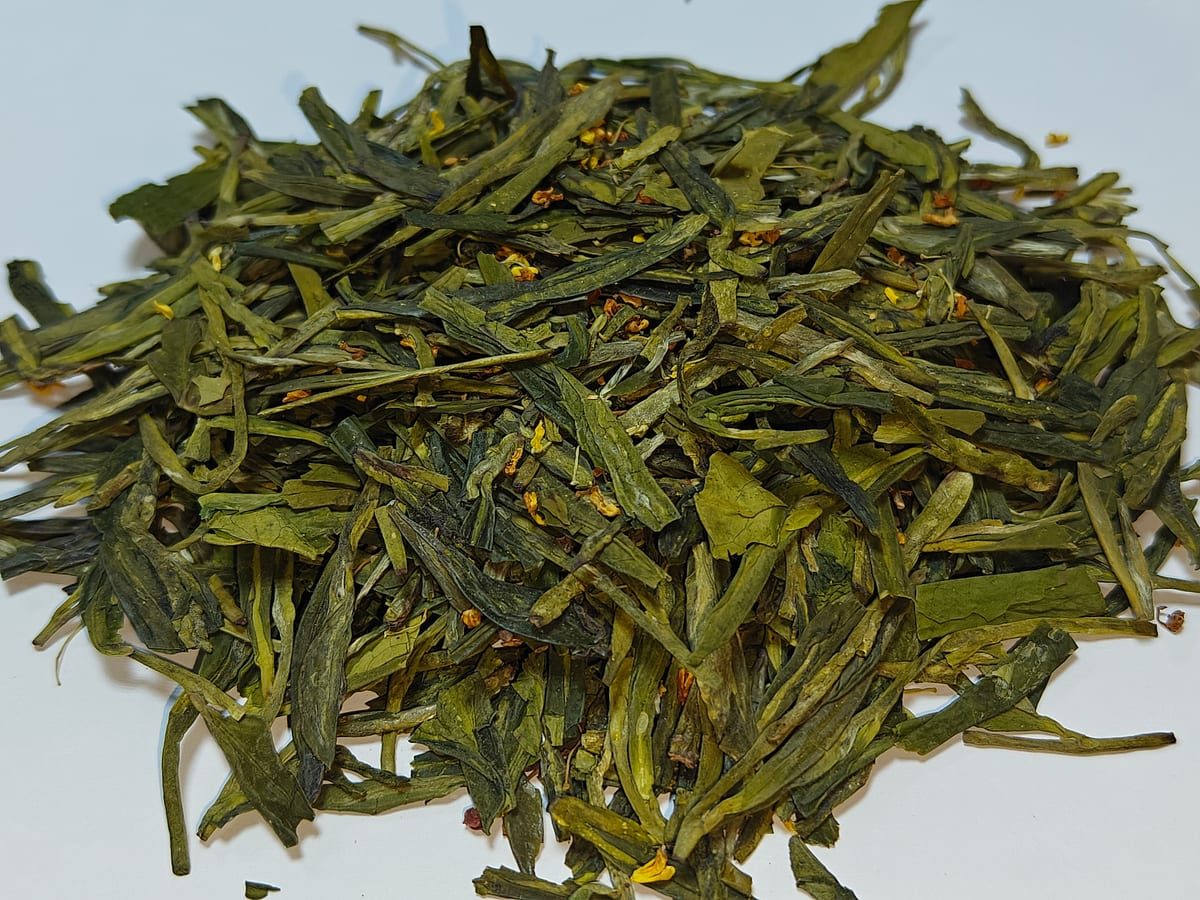
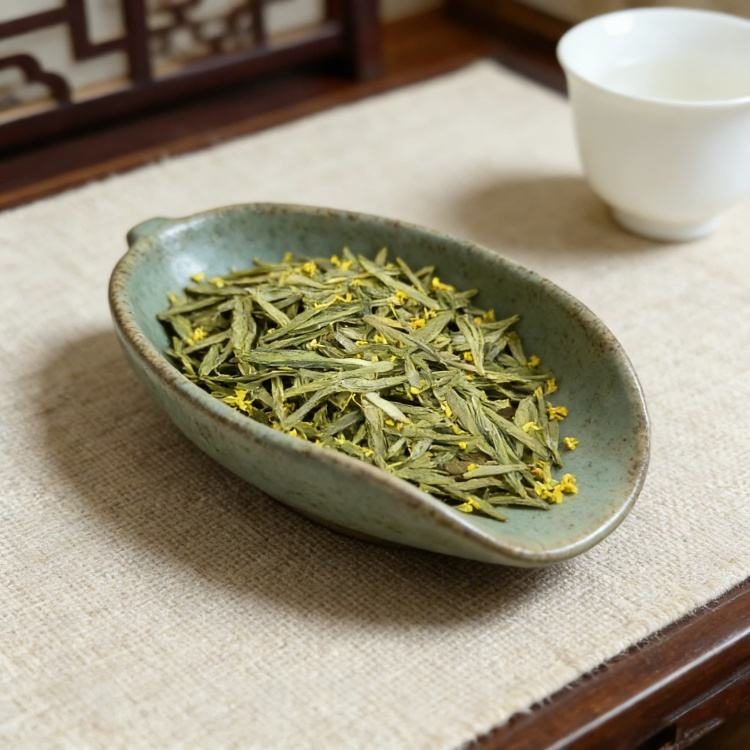
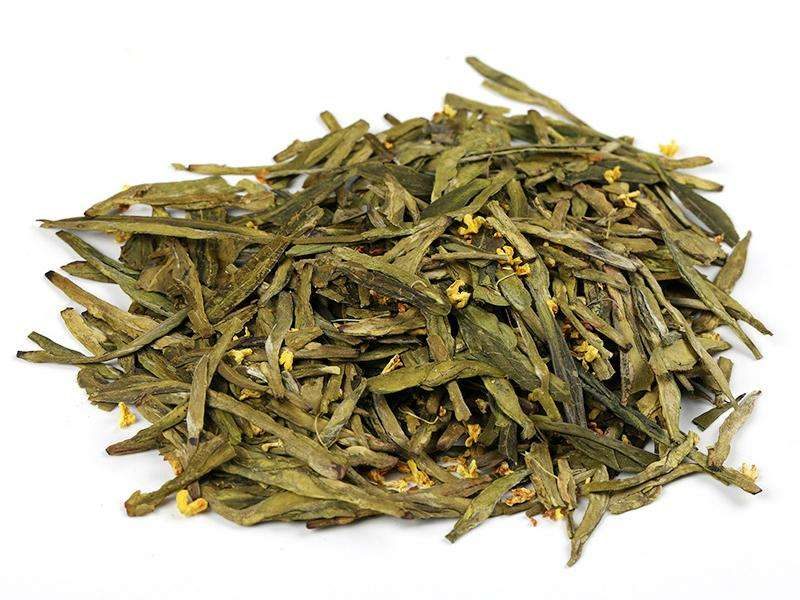
Osmanthus Longjing Green Tea
Delicate floral aroma with a light, refreshing and soothing character. Longjing (Dragon Well) is one of China's most celebrated green teas, elevated here with the sweet, apricot-like fragrance of osmanthus blossoms. Suited for premium tea service and specialty menus.
About Osmanthus Longjing Green Tea
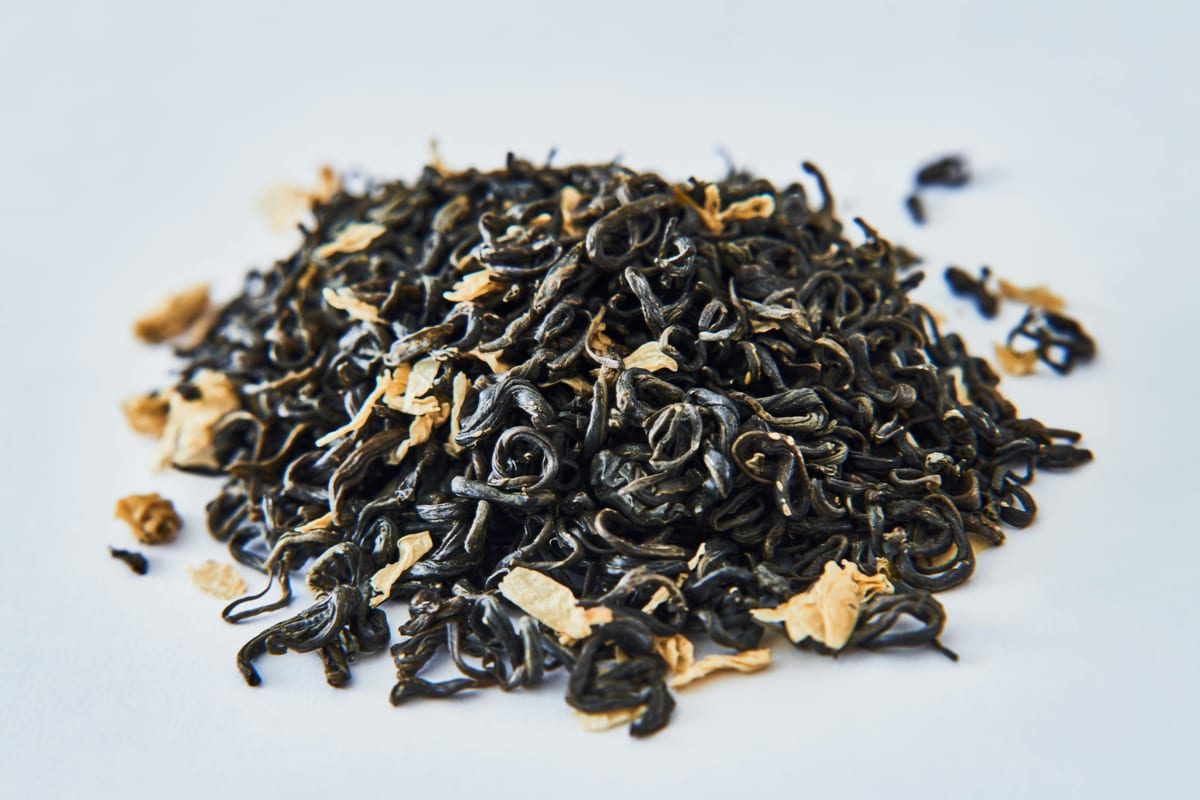
Osmanthus Longjing is a pairing of two ingredients that have been celebrated in Chinese tea culture for centuries. Longjing — Dragon Well — is one of China's ten most famous teas, grown in the hills surrounding Hangzhou's West Lake and recognised for its flat, hand-pressed leaves and clean, vegetal sweetness. Osmanthus is a small golden blossom with a fragrance described as apricot, peach and honey. Together, they produce a cup that is light, floral and layered — appropriate for any setting where the tea experience itself is part of the offering.
About Longjing
Longjing green tea has been grown around West Lake in Zhejiang province for over 1,200 years and holds protected designation of origin status in China. The leaves are distinctive — flat and straight, pressed during roasting against the walls of a hot pan in a technique that requires years of skill to master. This pan-firing process, unlike the steaming used in Japanese green tea processing, produces a dry, toasted character alongside the natural vegetal sweetness of the leaf. The result is a tea that is complex without being heavy, and approachable without being bland.
Osmanthus — The Fragrance Layer
Osmanthus blossoms are harvested in autumn and dried at low temperatures to preserve their essential oils. The scenting process — where tea leaves are layered with fresh osmanthus and allowed to absorb the fragrance — is an ancient technique used across Chinese tea production. In this blend, the osmanthus adds a sweet, fruity top note to the Longjing's base, without masking the tea's character. The result is a cup that opens with floral fragrance and finishes with the clean, lingering sweetness of the leaf.
Serving for Multiple Infusions
Longjing is designed to be re-steeped. The first infusion — 30 to 45 seconds at 85°C — produces the lightest, most fragrant cup, where osmanthus is most prominent. Each subsequent infusion reveals more of the leaf's vegetal depth, while the floral note softens. Most guests find two to three infusions ideal. For fine dining and premium tea service, presenting the re-steeping process as part of the experience adds a layer of theatre and value that justifies a higher menu price per pot.